If you searched 'better grow hydro Pasadena,' you're probably trying to do one of two things: find a reliable local hydroponics shop in the Pasadena area, or figure out how to actually grow better using hydroponics. This guide covers both. You'll get a rundown of real local options worth checking out, plus a practical, stage-by-stage hydro setup plan you can start acting on today whether you're a first-timer or you've been running a system for a while and things just aren't dialing in.
Better Grow Hydro Pasadena Guide: Setup, Systems, Troubleshooting

Marcus Holloway
24 Mar 2026
Local shop search vs. improving your hydro grow: clarify what you actually need
These are two different problems that often get tangled together in a single search. If you're new to hydroponics, you probably need both: a decent local store where you can pick up equipment and ask questions, and a clear sense of what you're actually building before you walk in. If you're already growing and things are off, you likely don't need a new store as much as you need to diagnose your system.
For local options, there are a few Pasadena-area stores worth knowing about. Boldly Grow Hydro at 1271 E Colorado Blvd (Pasadena, CA 91106) is one that shows up as a retail partner for <span>quality nutrient and mycorrhizae brands</span>, which is a decent signal that they carry products from serious suppliers. Alternitive Hydroponics at 3870 E Colorado Blvd (Pasadena, CA 91107) is another option on the same corridor. Magic Growers at 2795 Eaton Canyon Dr (Pasadena, CA 91107) is a third store in the area that carries similar product lines. All three are worth a visit in person before committing, because the single most important thing a local hydro shop can give you is knowledgeable staff, and that's something you can only evaluate face-to-face.
When you walk into any of these stores, pay attention to a few things: Do they ask what you're growing before recommending a nutrient line? Do they stock pH and EC meters, and can they explain the difference? Do they carry more than one grow medium option? If the answer to those is yes, you're in a good spot. If they just point you to the most expensive starter kit on the shelf without asking questions, take the product research home and do it yourself first.
On the education side, if you're brand new and want structured instruction rather than YouTube rabbit holes, look into options like Hydro Harley's online courses. They offer an 'Introduction to Hydroponics' class as well as a 12-week Master Growers Short Course, with live-streamed sessions, recorded options, and some one-on-one time. On-site consultation is also available for growers who need personalized help. These aren't Pasadena-specific, but they're a credible option for filling in knowledge gaps quickly, especially if your local store's staff is stretched thin.
Pick the right hydro system for your space and what you're growing
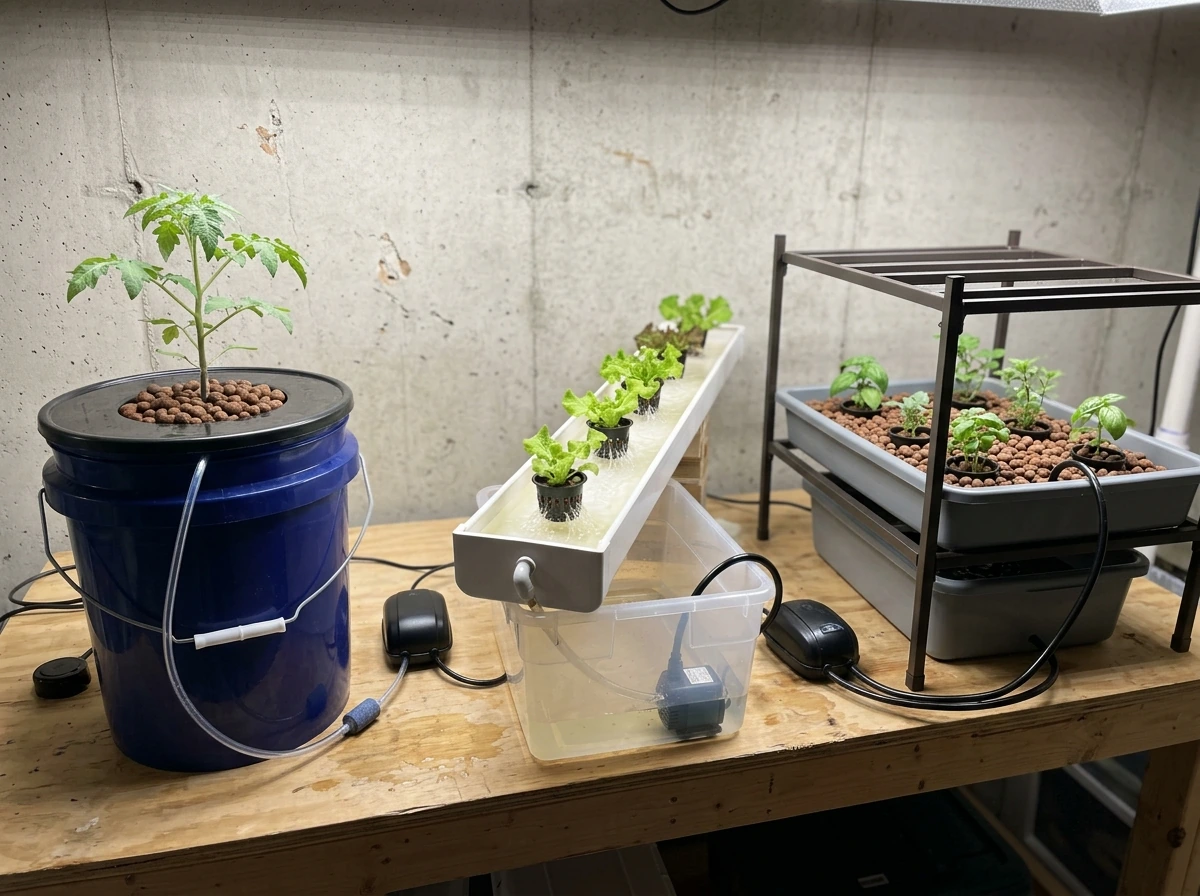
The system type matters more than most beginners realize, and choosing the wrong one for your space or crop is one of the most common reasons a grow underperforms. Here's a straight comparison of the main options:
| System Type | Best For | Space Fit | Skill Level | Main Watch-Out |
|---|---|---|---|---|
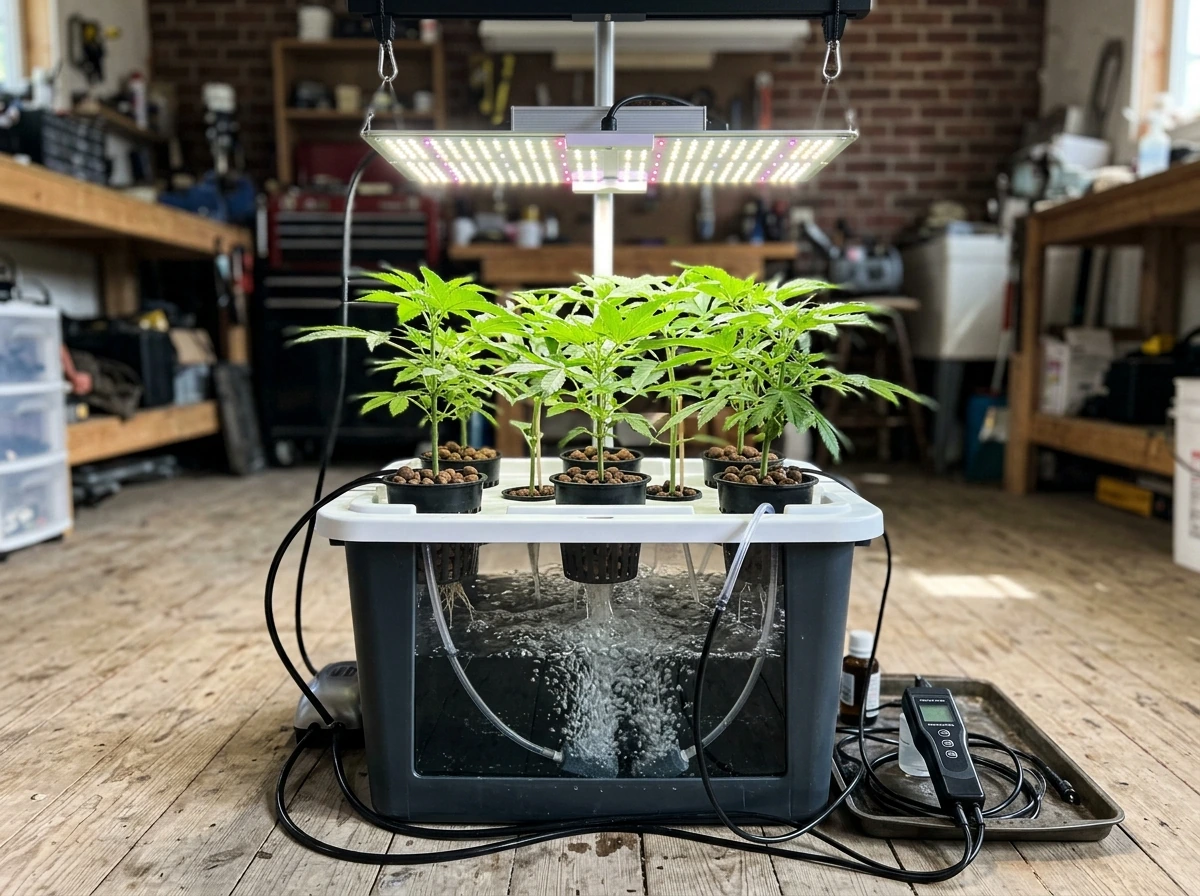
| Deep Water Culture (DWC) | Leafy greens, herbs, cannabis | Small to medium tents/rooms | Beginner-friendly | Water temp and dissolved oxygen management |
| Recirculating DWC (RDWC) | Multiple plants, larger canopies | Medium to large rooms | Intermediate | Pump/reservoir maintenance, contamination risk |
| NFT (Nutrient Film Technique) | Lettuce, strawberries, herbs | Long, narrow spaces | Intermediate | Pump failure = immediate root dry-out |
| Flood and Drain (Ebb & Flow) | Most crops, good for experiments | Flexible, table-based | Beginner to intermediate | Timer reliability, medium choice |
| Drip System | Tomatoes, peppers, larger plants | Scalable | Intermediate to advanced | Emitter clogging, runoff management |
For most home growers in Pasadena running a tent or small room, DWC is the easiest starting point. It's low-cost to set up, gives roots direct access to oxygenated nutrient solution, and is forgiving enough that you can dial it in over your first few weeks without catastrophic failure. RDWC is the natural upgrade once you want to run multiple sites from a shared reservoir. NFT is efficient but less forgiving: if your pump dies for a few hours, roots dry out fast. Flood and drain is a good middle ground for growers who want flexibility in medium choice. Drip systems make the most sense for heavy-fruiting plants like tomatoes or peppers that need consistent, targeted feeding.
Layout considerations for indoor Pasadena grows
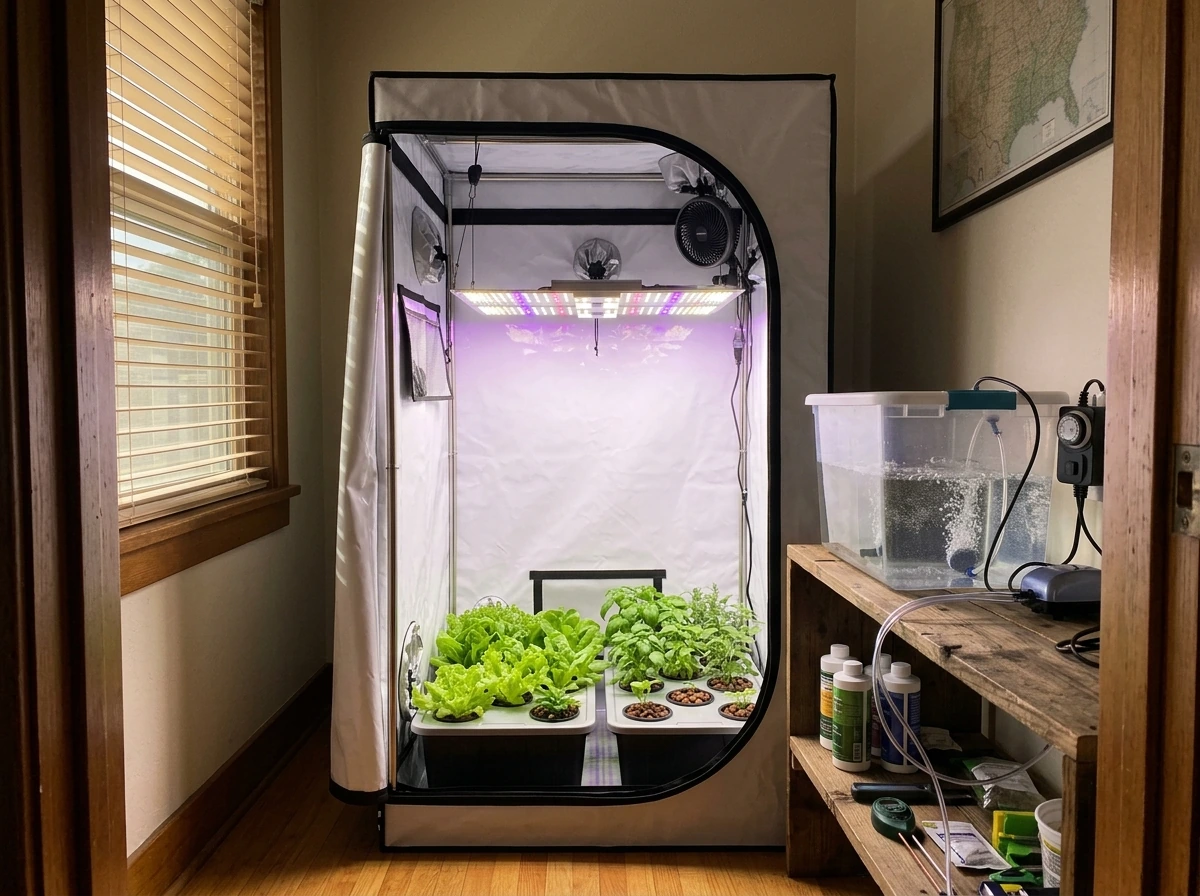
Southern California's climate is a real asset for outdoor growing, but most urban Pasadena growers are working indoors in tents or spare rooms, which means you're managing everything artificially. A 4x4 tent is the most common setup and works well with DWC buckets or a small flood-and-drain table. If you're in a 2x4, go with a single-bucket DWC or a small NFT channel. Anything larger than a 5x5 starts to benefit from RDWC or a drip setup with a dedicated reservoir room.
The equipment you actually need (with real numbers)
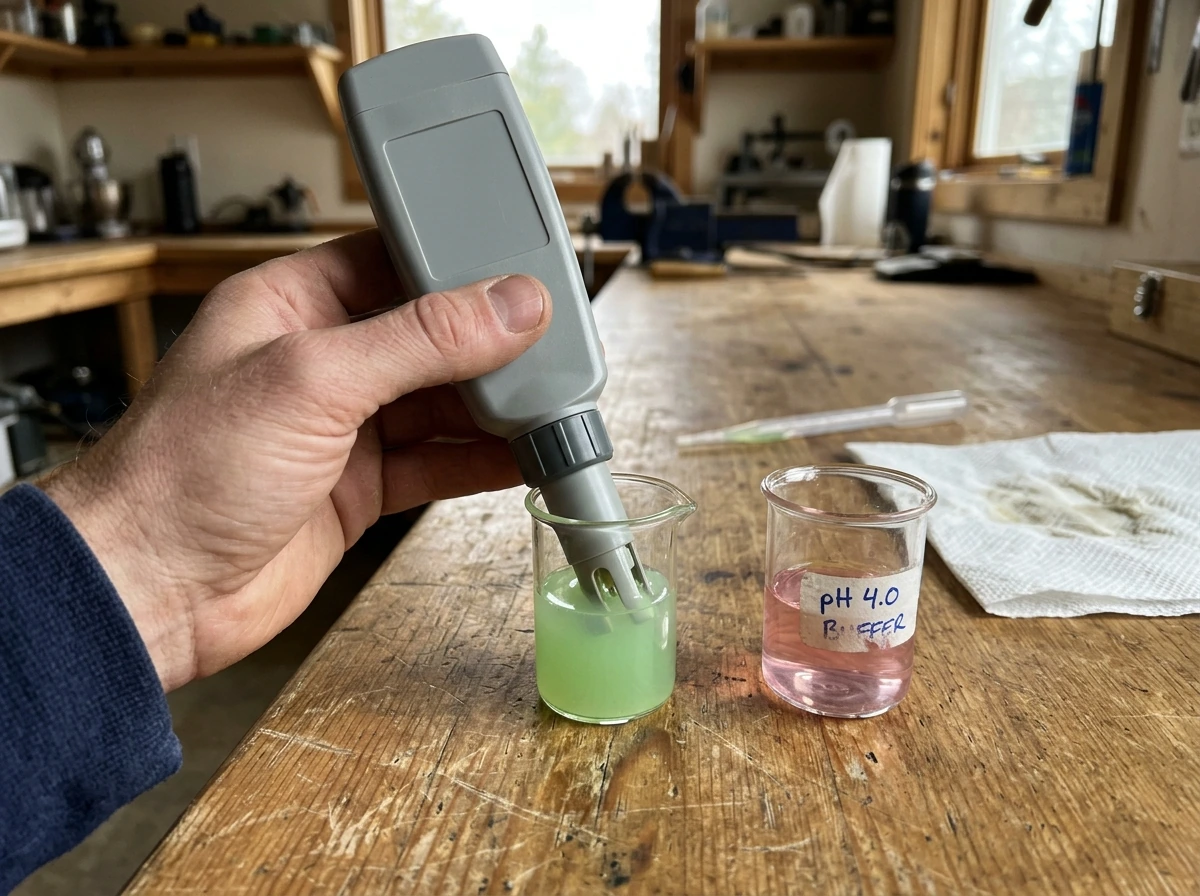
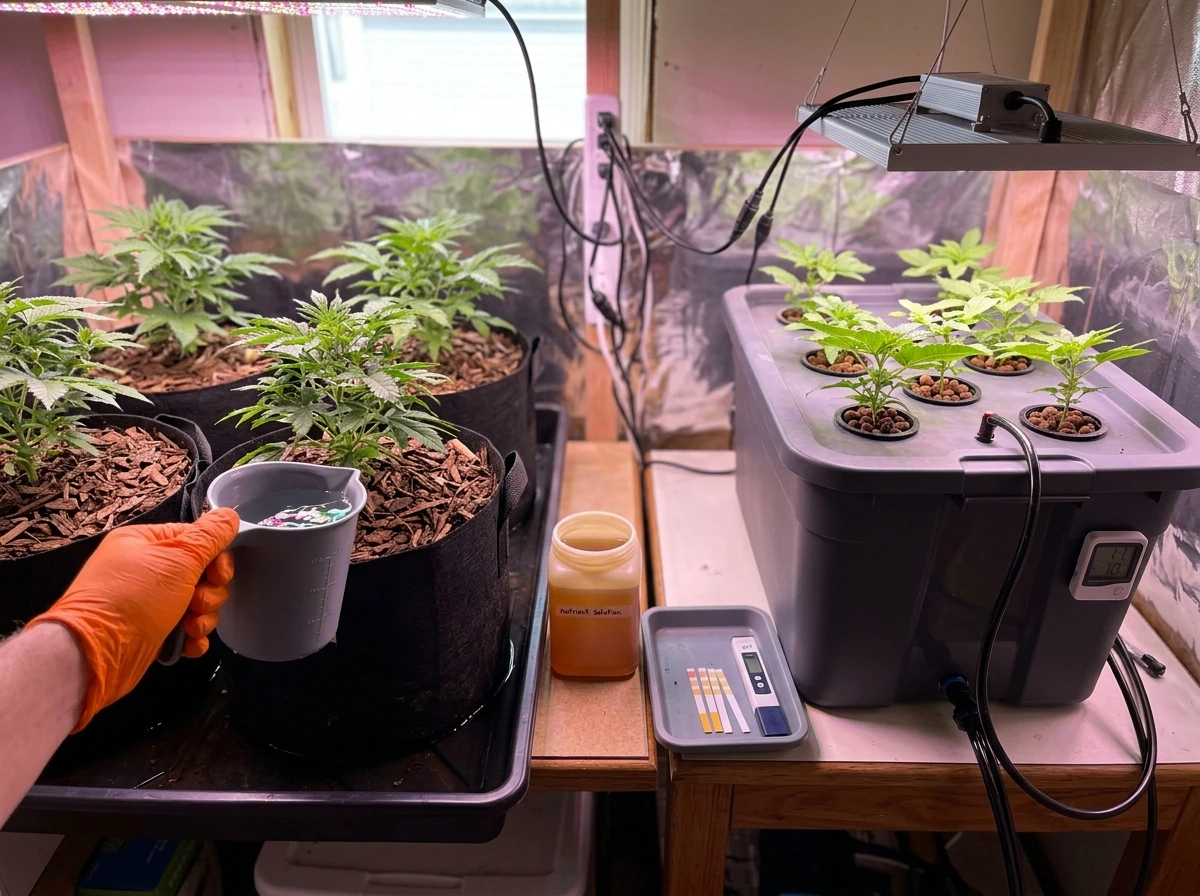
You can't grow well in hydroponics without measuring. This isn't optional, and it's the area where I see the most beginners skip corners and then wonder why their plants are struggling two weeks in. Here's what you need and what you're measuring for:
- pH meter: calibrate with pH 7 buffer first, then pH 4 buffer, rinsing the probe between each. Re-calibrate every 1-2 weeks. Target root zone pH: 5.5–6.5 for most crops.
- EC/PPM meter: calibrate using a reference solution of 1.413 mS/cm (standard). This tells you nutrient concentration in the reservoir.
- Thermometer (water and air): water temp target is 18–24°C (64–75°F). Above 24°C, dissolved oxygen drops and root pathogens thrive.
- Hygrometer/thermometer combo: air temp target is 70–75°F in veg, 65–80°F in bloom. Relative humidity: 60–70% in veg, 40–50% in late bloom.
- Air pump and air stones (for DWC/RDWC): more aeration = more dissolved oxygen. Size your pump for at least 1 watt per gallon of reservoir volume.
- Oscillating fan: needed for transpiration, CO2 exchange, and preventing hot spots under the light.
- Light meter or PAR meter (optional but useful): confirms your light is actually hitting target intensity at canopy level.
On lighting: for a 4x4 tent, you need roughly 200–400 watts of actual LED draw (not 'equivalent' wattage) from a quality fixture. Blurple LEDs are mostly marketing. Full-spectrum quantum board LEDs are the current standard for both veg and bloom in the same space. If you're running a 2x4, 150–200W actual draw is enough. HPS is still a valid option if you already have it and your room can handle the heat, but in a Pasadena summer, thermal management gets tricky with HPS.
Nutrients and grow medium: how to start without making rookie mistakes
Choosing your grow medium
The medium in hydroponics is just a root anchor, not a nutrient source, so the choice is mostly about water retention, oxygen ratio, and how well it fits your system type. Here's how the main options compare:
| Medium | Best System Match | Water Retention | Oxygen Ratio | Reusable? |
|---|---|---|---|---|
| Rockwool | NFT, DWC seedling stage, flood & drain | High | Moderate | No (single use) |
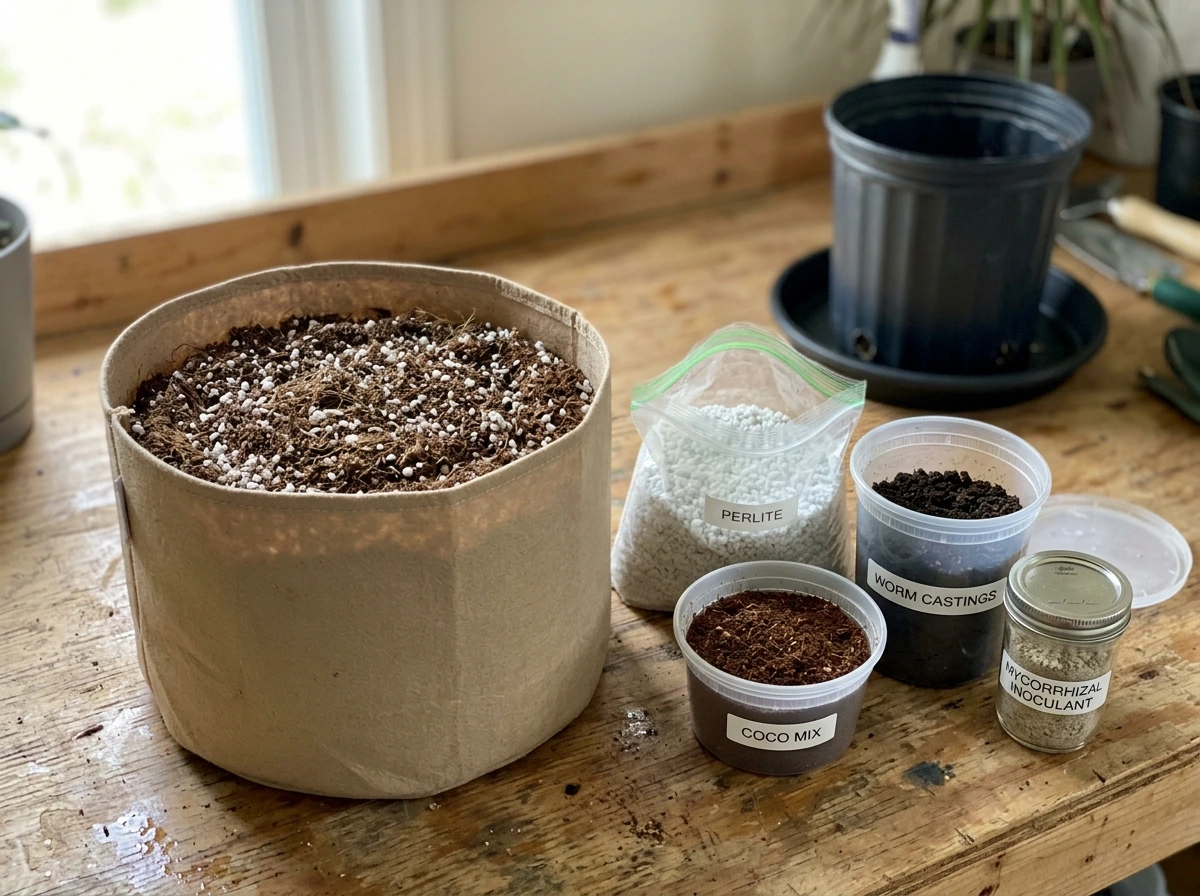
| Coco coir | Drip, flood & drain | High | Good with perlite mix | No (technically, but some do re-use) |
| Expanded clay (hydroton) | DWC, RDWC, flood & drain | Low | Excellent | Yes (sterilize between runs) |
| Perlite | Mix with coco, drip systems | Low | Excellent | No (too fine for standalone use) |
| Mesh net pots (air pruning) | DWC, RDWC | N/A (just a holder) | Maximum | Yes |
For a beginner DWC setup, expanded clay in mesh net pots is the easiest starting point. It drains freely, you can see root development easily, and you won't overwater because the roots hang directly into the solution. Rockwool is excellent for starting seeds and cuttings before transferring them into your system. If you're running a drip system, a 70/30 coco/perlite mix is the go-to standard that gives you strong water retention without suffocating roots.
Dialing in your nutrient solution
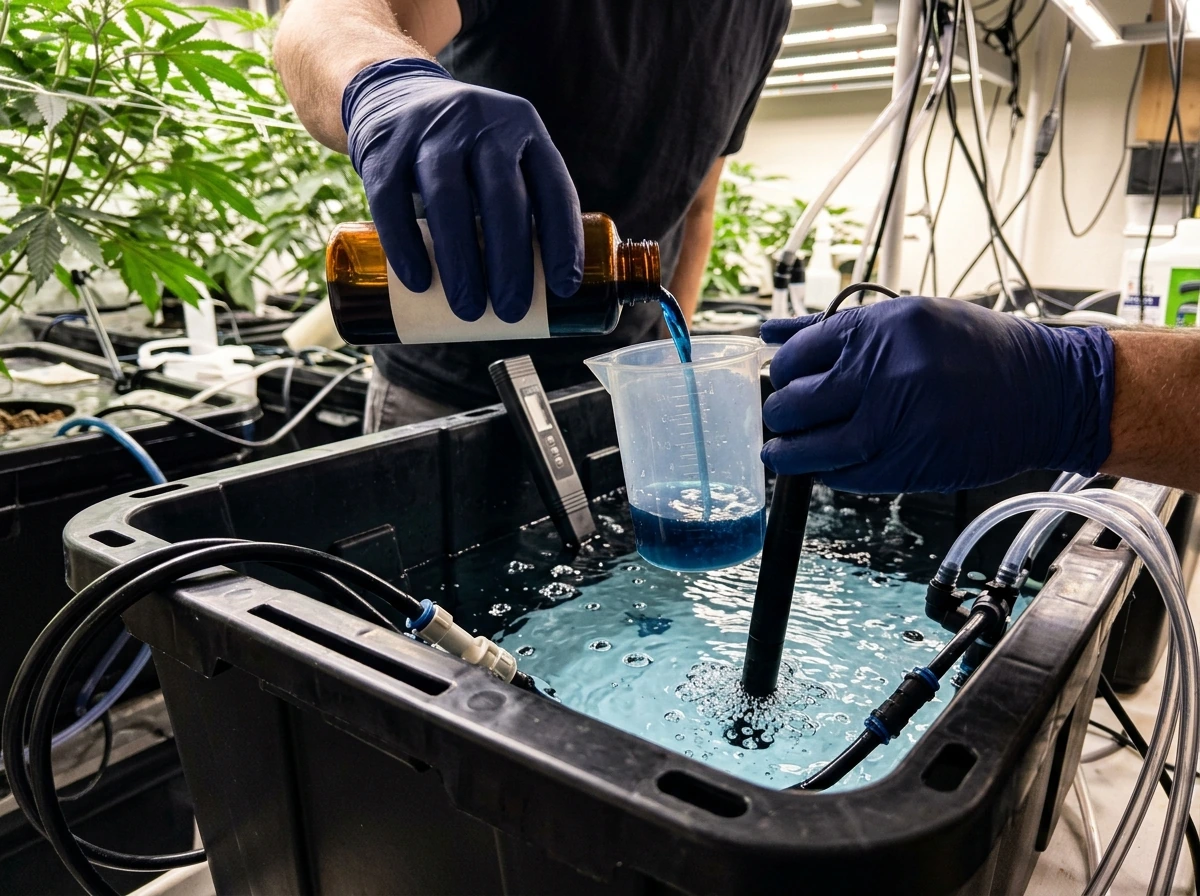
Start with a two-part or three-part base nutrient designed specifically for hydroponics (not a soil formula). Mix at the lower end of the recommended dose first, measure EC, then adjust. Here are practical starting targets by crop:
| Crop | Target pH | Target EC (mS/cm) | Notes |
|---|---|---|---|
| Lettuce | 5.5–6.5 | 0.8–1.2 | Very sensitive to high EC, keep it light |
| Basil / herbs | 5.5–6.0 | 1.0–1.6 | Lower pH range preferred |
| Tomatoes | 5.8–6.3 | 2.0–3.5 | Increase EC as plants mature and fruit sets |
| Cannabis (veg) | 5.8–6.2 | 1.2–2.0 | Keep stable, don't chase high EC |
| Cannabis (bloom) | 6.0–6.5 | 2.0–2.8 | Let EC rise slightly as flush approaches |
The most important thing to understand about pH and nutrients is that pH drift causes most of what looks like nutrient deficiency. When pH drops below 5.5 in your reservoir, iron and manganese become over-available while calcium and magnesium get locked out. When pH climbs above 6.5, the opposite happens. This is why you'll see yellowing, brown spots, or tip burn that doesn't respond to adding more nutrients, because the problem isn't the amount of nutrient in the water, it's that the plant can't absorb what's already there. Check pH daily, especially in the first few weeks, until you know how fast your system drifts.
Top beginner mistakes to avoid: mixing nutrients at full label dose right out of the gate (this causes burn on young plants), not pH-adjusting after mixing nutrients (the act of mixing changes pH), ignoring EC creep in a reservoir you're topping off with water (as plants drink water faster than nutrients, EC rises over time), and skipping cal-mag in systems using RO water or soft tap water.
Fast troubleshooting for common hydro problems
Root issues
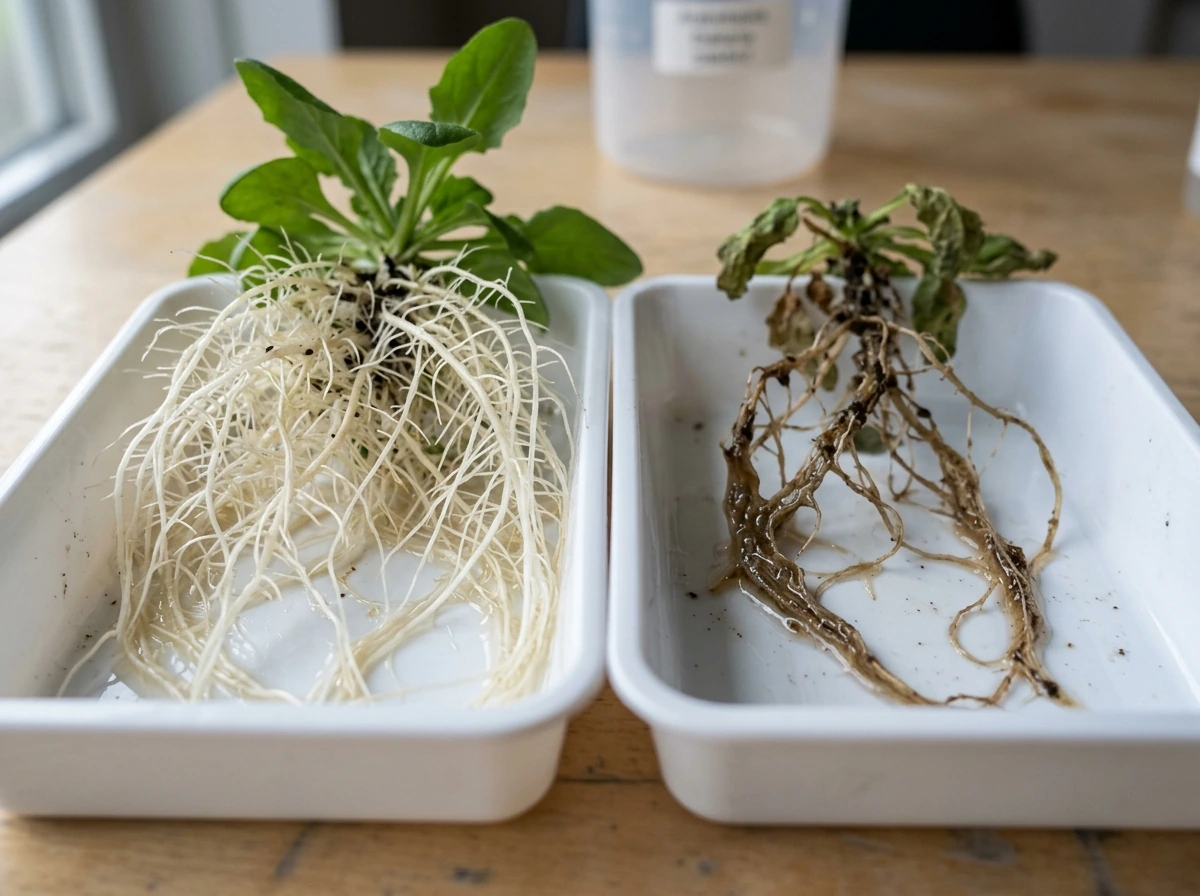
Healthy hydro roots should be white or very light cream-colored and dense. If they're brown and slimy, you have root rot, almost certainly from Pythium. The cause is almost always warm water (above 24°C/75°F), low dissolved oxygen, or both. Fix it immediately: drop reservoir temp with a water chiller or frozen water bottles, increase aeration with a larger air stone, and consider adding a beneficial bacteria product (like Hydroguard or similar) to out-compete the pathogen. Hydrogen peroxide (3% food grade at 3 ml per gallon) is a short-term nuclear option but kills beneficial biology too, so use it as a reset rather than a routine.
pH and EC problems
If pH is drifting more than 0.3 points per day, check reservoir volume (small reservoirs are less stable), plant size vs. reservoir ratio (big plants in small reservoirs cause rapid pH swings as they drink), and whether your tap water has high alkalinity (buffering capacity). EC creeping up despite normal feeding means your plants are drinking more water than nutrients, which is a normal veg-stage behavior. Top off with plain pH-adjusted water instead of full-strength nutrient solution. EC dropping fast usually means high feeding demand, a sign to increase nutrient concentration slightly.
Leaf problems
Yellow lower leaves: often normal senescence in older veg growth, but if spreading upward fast, suspect nitrogen deficiency or pH being too high. Yellow between leaf veins (interveinal chlorosis): classic magnesium or iron deficiency, usually a pH problem first, a nutrient problem second. Burnt brown tips: nutrient burn from EC too high or a pH spike. Curling upward: heat stress or low humidity. Curling downward (clawing): nitrogen toxicity or overwatering (in systems with substrate).
Algae
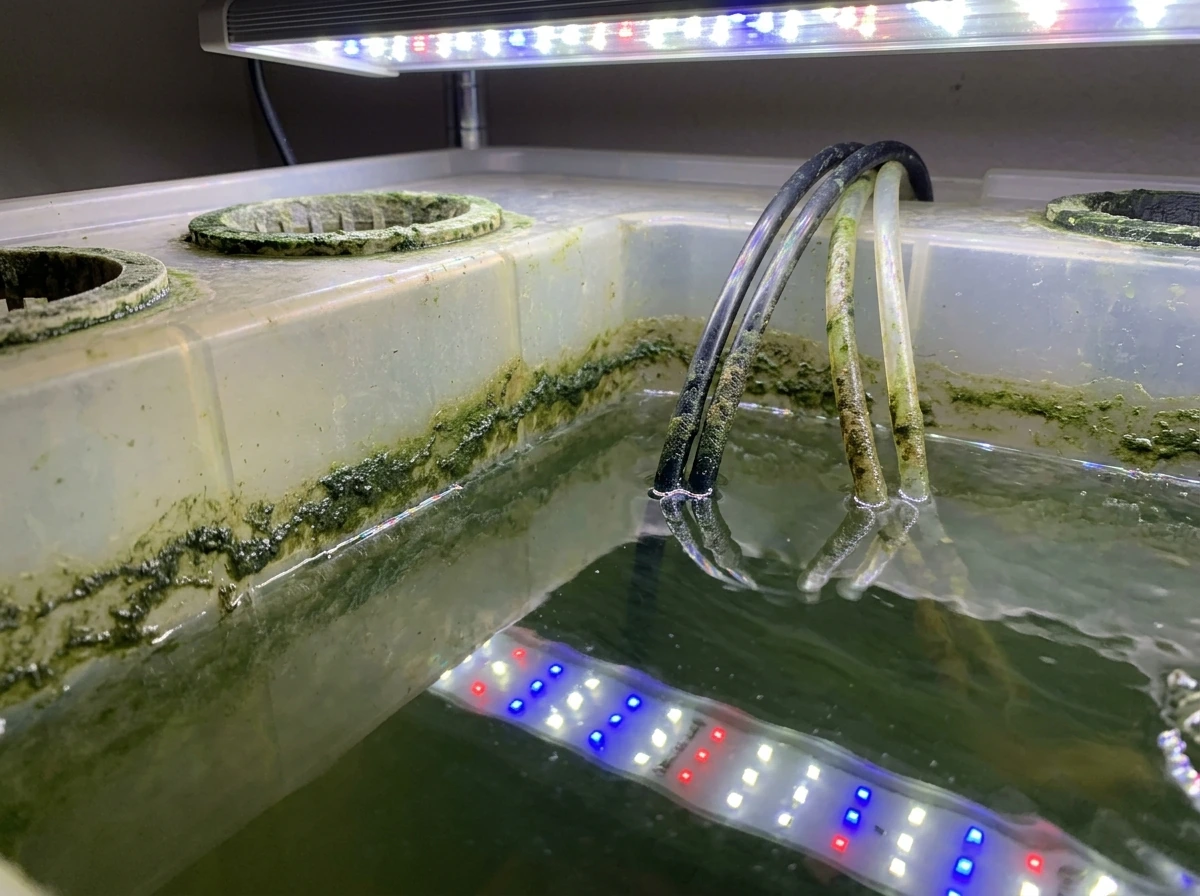
Green slime on your reservoir walls, tubes, or net pot collars means light is getting into your nutrient solution. Algae competes with roots for oxygen and creates ideal conditions for fungus gnats. The fix is simple but needs to be thorough: cover every surface that touches nutrient solution with light-blocking material. Black reservoir lids, opaque tubing, and net pot collars that seal tightly are all standard. Once algae is established, drain and clean the system completely before restarting.
Stage-by-stage growth checklist: seedling through harvest
Week 1–2: Seedling / Propagation
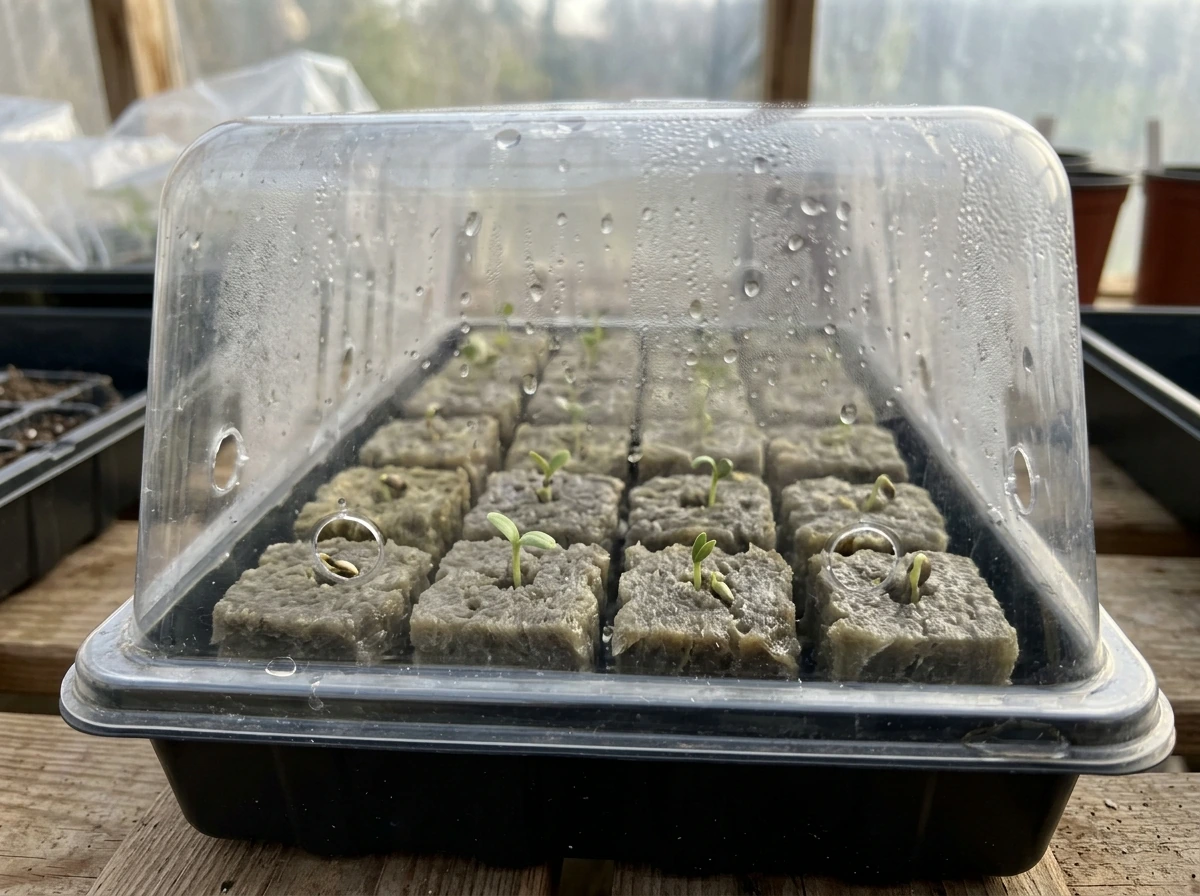
- Start seeds in rockwool cubes soaked in pH 5.5 water (not nutrient solution yet)
- Keep humidity at 70–80% with a dome or humidity tent
- Air temp: 72–78°F, no direct strong airflow on seedlings
- Light: 18 hours on, 6 off at low intensity (seedlings don't need high PAR)
- Introduce very dilute nutrient solution (EC 0.4–0.6) only once the first true leaves appear
- Transfer to main system once roots are visible through the bottom of the rockwool cube
Week 2–5: Vegetative Growth
- pH: maintain 5.8–6.2, check daily
- EC: build up to crop-appropriate range over the first week, don't jump straight to max
- Water temp: 18–22°C (64–72°F), check with a thermometer, not by feel
- Air temp: 70–80°F during lights on, 65–75°F lights off
- RH: 60–70%
- Light: 18/6 schedule, increase intensity gradually as canopy develops
- Airflow: gentle oscillating fan at canopy level, enough to see slight leaf movement
- Top off reservoir with pH-adjusted water when level drops, full nutrient change every 7–10 days
- Train plants (LST, topping) during this phase if applicable to your crop
Week 5 onward: Bloom / Fruiting / Harvest
- Shift light schedule to 12/12 for photoperiod-sensitive crops
- Increase EC to bloom target range (see table above)
- Lower RH gradually to 40–50% in late bloom to reduce disease risk
- Monitor for calcium deficiency (common in bloom when uptake demand increases)
- For cannabis and fruiting crops: switch to a bloom-focused nutrient ratio (lower nitrogen, higher phosphorus/potassium)
- For leafy crops: harvest outer leaves continuously or do a full cut-and-come-again at week 4–5
- Final week before harvest: flush reservoir with plain pH-adjusted water for 5–7 days (crop dependent)
Pest and disease management in a hydro system
Hydro systems don't eliminate pests, they just change which ones are most common. In a controlled indoor environment, your main threats are fungus gnats, spider mites, thrips, and powdery mildew. Fungus gnats are especially common in hydro setups that have any moisture on exposed surfaces, algae growth, or standing water near the base of the tent. Adults lay eggs in wet surfaces; larvae damage roots. UC IPM research is clear on this: eliminate standing water, control algae, keep surfaces dry, and you eliminate most of the habitat they need.
For fungus gnat prevention specifically: eliminate algae as described above, don't let water pool on your reservoir lid or flood tray floor, use yellow sticky traps to monitor adult populations, and if larvae are a problem, beneficial nematodes (Steinernema feltiae) applied to any exposed medium are highly effective. Beneficial insects like predatory mites (Hypoaspis miles) are also an option for longer-term biological control in larger setups.
Spider mites and thrips are controlled best through environmental management first: keep humidity above 50% in veg (mites hate it), inspect plants weekly especially on the undersides of leaves, and quarantine any new cuttings before introducing them to your system. If you get an outbreak, neem oil or insecticidal soap work for early-stage infestations, but once mites are established in a DWC system they're very hard to eliminate without a full system teardown and reset. Prevention is dramatically easier than treatment.
Powdery mildew is a humidity and airflow issue. Keep your RH below 50% in late bloom, run airflow across all leaf surfaces, and avoid wide temperature swings between lights-on and lights-off. If you see white powdery spots, remove affected leaves immediately and treat with potassium bicarbonate spray. Don't use heavy oil-based sprays in late bloom on anything you're going to consume.
Your local next steps: what to do this week
Here's a practical action plan you can work through right now rather than leaving this article and starting over from scratch.
- Visit at least two of the Pasadena stores in person (Boldly Grow Hydro at 1271 E Colorado Blvd, Alternitive Hydroponics at 3870 E Colorado Blvd, or Magic Growers at 2795 Eaton Canyon Dr). Tell them your space dimensions, what you want to grow, and your budget. Their first questions back will tell you whether they can actually help you.
- Before you buy anything, confirm the store stocks: a quality pH meter and EC meter, pH up/down solution, and at least one reputable nutrient line made for hydroponics (not repurposed soil nutrients).
- If you're already running a system that's underperforming, measure your current pH and EC today. If you don't have meters, that's step one. Most problems that look like nutrient issues are actually pH problems you can confirm or rule out in 5 minutes.
- Check your water temperature. If you're running DWC and your reservoir is above 24°C (75°F), that's likely the root of your root problems. A small aquarium chiller or even freezing water in sealed bottles and rotating them through the reservoir can fix this immediately.
- For structured learning, look into the Introduction to Hydroponics class options available online if your local store can't give you a thorough walkthrough. Having a foundation in the core concepts, pH chemistry, dissolved oxygen, nutrient cycling, makes every troubleshooting session faster.
- If algae or pests are already present, do a full system clean before your next reservoir change. Drain completely, clean with diluted hydrogen peroxide, rinse thoroughly, and restart with fresh nutrient solution at the right pH and EC.
The best 'better grow' outcome in Pasadena isn't about finding the fanciest local shop or the most expensive nutrient line. It's about understanding your system well enough to catch problems early, having the right meters to actually measure what's happening, and building relationships with local staff or instructors who can give you a real answer when something goes wrong. The stores are there; the tools are accessible; the knowledge gap is what this guide is for. Start with your pH meter, and everything else follows from there. good to grow hydroponics good to grow hydroponics
FAQ
My pH readings look unstable, how do I know if it is the solution or the meter?
Start by verifying you have both meters, a pH meter and an EC/TDS meter, and then confirm your calibration schedule. A common failure mode is a pH probe that has not been recalibrated, which makes drift look “real” when it is actually meter error. If you suspect calibration, check with fresh calibration solutions before changing nutrients.
Should I add cal-mag in hydro, or only if my plants show deficiencies?
Yes, you can use cal-mag in some cases, but the goal is to match the water and crop needs, not to blindly add it. If you run RO or very soft water, calcium and magnesium can become limiting even when EC looks fine, so add cal-mag after you measure baseline EC and only then recheck pH to confirm the final mix is within your target range.
When my reservoir EC rises, should I add nutrients to “balance it”?
To avoid EC creep mistakes, top off with pH-adjusted water, not nutrient solution, unless EC has dropped below your target. If you add full-strength nutrients while topping, EC can climb quickly and you will see tip burn or locked-out lookalikes that do not respond well to “just adding more pH control.”
What is the first thing to troubleshoot if pH drops more than 0.3 per day?
If your pH drops fast (more than about 0.3 points per day), treat it like a stability problem first. Check for a small reservoir, oversized plant mass, and high alkalinity in your tap water, then consider increasing reservoir volume or adding mixing and aeration to reduce localized chemistry differences.
My DWC roots turned brown and slimy, do I fix nutrients or root rot first?
If roots are slimy and brown and the water is warm, assume oxygen and temperature are the primary causes before you assume a “nutrient” issue. Reduce reservoir temperature, increase aeration, and remove any rotting material, then reassess. If the outbreak is advanced, a reset is often faster than trying to salvage a compromised root zone.
How do I prevent powdery mildew without wrecking my bloom environment?
In most hydro systems, lights-off and temperature swings matter less than stable air movement and temperature control at canopy level. If you see powdery mildew, you want consistent airflow across leaf surfaces and a target RH under about 50% late bloom, then remove affected leaves promptly to reduce spore load.
How long should I quarantine new plants or clones before putting them in my hydro system?
Quarantine new cuttings, even from friends, because pests like thrips and fungus gnats can hitchhike on wet medium or leafy crevices. A simple rule is to inspect underside of leaves and monitor with sticky traps before introducing to your main system, even if you are using the “same nutrients and setup.”
When I make changes, how do I know what actually caused improvement or a setback?
Do not change multiple variables at once. The most useful approach is to adjust one thing (usually pH setpoint, reservoir temperature, or reservoir volume) and observe for 24 hours, because nutrient symptoms often lag while meter-driven issues show up immediately. Keep a short log of pH, EC, reservoir temp, and plant stage so you can spot patterns.
How do I choose LED wattage for a 2x4 versus a 4x4 tent?
Use the physical light draw, not marketing claims, and then match it to your footprint. For example, a 4x4 tent often needs about 200 to 400 watts actual LED draw, while a 2x4 can start around 150 to 200W, then fine-tune based on plant response like stretching and leaf color.
What is the fastest way to stop algae from coming back in my reservoir area?
Run algae prevention like a checklist: block light from every surface that touches solution, confirm opaque lids and net pot collars seal, and keep the floor and reservoir lid area dry. If algae is already present, drain and clean thoroughly before restarting, otherwise the system can cycle back into the same oxygen and pest problem.
Is NFT really harder than DWC, or is it just less forgiving?
For beginners, DWC in a 2x4 is usually simpler and more forgiving than NFT because roots stay in a consistent environment. NFT can work, but it punishes pump or power interruptions quickly, so if you do NFT, add safeguards like reliable timers and consideration for backup power or alarms.
My EC is dropping quickly, should I add more nutrients or check for leaks?
If EC drops fast while pH stays stable, it often means plants are consuming more than you are feeding, or you have lower-than-expected nutrient concentration. Increase nutrient strength slightly using your target and then re-check EC after mixing and settling, rather than jumping from low to high doses.